The Invisible
Engine of Status
The Anatomy of Status — The New Shoes of the Boardroom
In the contemporary landscape of high finance and corporate leadership, the visible markers of power have undergone a significant contraction. Historically, a man’s standing was communicated through a hierarchy of sartorial details, the cut of a suit, the weight of fabric, and above all, the quality of his shoes. As Tom Bolt observed, grandmothers once checked shoes for standing, using the condition and quality of leather to assess discipline and background. Today, as traditional dress codes have relaxed into tech-casual minimalism, that visual vocabulary has migrated from the floor to the wrist. In the modern boardroom, the mechanical watch has become the last analog scoreboard for assessing pecuniary strength and social standing.
The Shoe-to-Wrist Pivot: The Wrist as the Last Dense Signifier
The democratization of luxury fashion has reduced the signaling power of many traditional garments. When a billionaire founder and a junior analyst both wear identical fleece vests and sneakers in the same meeting, the mechanical watch remains the only socially acceptable item that can bridge the gap between casual attire and substantial capital. It is the key visible element capable of conveying net worth, institutional competence, and discernment without requiring a single word. Since COVID, this shift has accelerated. Suits and ties have given way to a much more casual office uniform, which means the wristwatch is now an even more important indicator of standing — even allowing for the proliferation of luxury sneakers. For many men, the wristwatch is also the only socially acceptable form of jewellery available to them. A useful cultural analogy is the famous business-cards scene in American Psycho: indistinguishable surface cues, intense rivalry, signalling buried in finely calibrated detail.
This shift is driven by practical economics. A mechanical watch is gloriously inefficient, less accurate than a smartphone and requiring regular, expensive servicing. Yet this very inefficiency serves as an honest signal of superior resources and a distance from necessity. In an environment where suits can be rented and shoes mass-produced, the watch offers a dense, portable indicator of success that cannot be easily replicated. It is worth adding: the wristwatch is perhaps the only status symbol a man can take with him. You cannot carry a Ferrari into a bar; you can perhaps twizzle the keys with the logo. A watch, by contrast, goes everywhere — it depicts personality, style, financial standing and character, flashy or humble, in a way nothing else worn on the body still does. For wealth managers advising ultra-high-net-worth clients, it has become a shorthand for portfolio discipline and long-term intentionality.
The Role of Scarcity and Specialized History
The true value of an apex brand such as Rolex or Patek Philippe lies in more than mechanical performance; it lies in the difficulty of acquisition and the depth of its history. Scarcity and specialized provenance create an insider knowledge factor that functions as a quiet handshake among the elite. A collector who understands why a particular vintage Daytona or a Khanjar Rolex carries exceptional weight is demonstrating cultural capital that protects the asset’s value floor. These pieces are not bought off the shelf; they are earned through relationships, research, and patience in the secondary market. This controlled difficulty ensures that the watch remains a private signal of success rather than a widely available consumer good.
The psychology of discernment is straightforward. In the boardroom, a watch with deep historical resonance, such as one linked to a specific military or diplomatic story, communicates that the wearer operates at a level where relationships and context matter. It distinguishes the established participant from the newcomer who simply buys what is currently fashionable. Wealth managers recognize this dynamic when allocating capital: provenance and rarity are not decorative details; they are the mechanisms that preserve liquidity and long-term appreciation in a market where hype can evaporate quickly.
Investor Strategy: Identifying Hidden Value
For the investor, status is not a side effect of the market; it is the primary engine of demand. Watches priced above CHF 50,000, representing only 1.4% of total volume generate 89% of industry growth. This concentration highlights a clear logic of asset allocation: capital flows toward pieces that offer verifiable scarcity and insider recognition rather than broad accessibility.
To identify hidden value, investors should look beyond current hype and focus on provenance, service history, and the specific stories that create exclusivity. Neo-vintage pieces from the 1990s, for example, often deliver superior craftsmanship and documented history at a fraction of the price of today’s most visible models. As automation and CNC techniques make industrial perfection more common, the market has bifurcated. Some investors pursue apex-technology watches, such as those from Richard Mille, that embody technological capital through advanced materials and engineering. Others pursue vintage or neo-vintage pieces that embody cultural capital through history, provenance, and artisanal depth. Both paths can deliver strong returns, but each requires a different understanding of what drives long-term value. The mechanical watch remains the last reliable indicator of discernment and intentionality. It is a private signal of success that cannot be easily copied or bought at retail. For the serious investor, understanding this anatomy of status is essential. The watch on the wrist is no longer an accessory. It is a deliberate choice to hold an asset that communicates competence, history, and control in a world that increasingly values those qualities. In the end, the mechanical watch functions as both a financial instrument and a personal statement, one that continues to reward those who understand its deeper mechanics of value.
In the boardroom of 2026, the mechanical watch remains the last reliable indicator of discernment and intentionality. It is a private signal of success that cannot be easily copied or bought at retail. For the serious investor, understanding this anatomy of status is essential. The watch on the wrist is no longer an accessory. It is a deliberate choice to hold an asset that communicates competence, history, and control in a world that increasingly values those qualities. In the end, the mechanical watch functions as both a financial instrument and a personal statement, one that continues to reward those who understand its deeper mechanics of value.
The Economics of Emulation — The Veblen Inversion
In orthodox economics, demand typically falls as price rises. In the luxury watch market, the opposite holds true. For the leading houses, higher prices do not deter buyers, they attract them. This is the Veblen Inversion: the deliberate use of elevated pricing and restricted supply to increase desirability and reinforce long-term value. In 2026, this dynamic has become the central engine of the high-end market, transforming mechanical watches from functional instruments into sophisticated stores of capital where the primary value is derived from the height of the barrier to entry.
The Veblen Logic: Price as Social Filtration
A Veblen good is one whose desirability increases with its price, driven by its role as a signal of pecuniary strength. For brands such as Rolex, Patek Philippe, Audemars Piguet, and Richard Mille, price hikes function as a mechanism of social filtration. A $250,000 tourbillon in an advanced composite case is not priced according to raw material costs alone. It is priced to create strategic scarcity, a barrier that ensures the asset remains accessible only to those with substantial resources and the knowledge to navigate the market.
This logic is rooted in the simple economic principle of conspicuous consumption: the display of wealth through goods that demonstrate exemption from ordinary constraints. A mechanical watch is gloriously inefficient, less accurate than a smartphone and requiring regular, costly servicing. Yet this inefficiency serves as an honest signal of superior resources. As prices rise, the resolution of the signal increases, drawing capital from investors seeking to distinguish themselves from the broader market. The result is a self-reinforcing cycle: higher prices attract more capital, which in turn supports further price appreciation. The market has responded accordingly. The Veblen Inversion has created a fortress around the apex brands, making their products safer long-term stores of value than many traditional assets.
The Calculus of Stealth — Quiet Luxury and Cultural Alpha
In orthodox economics, demand typically falls as price rises. In the luxury watch market, the
In the hyper-professionalized market of 2026, the highest financial premiums are no longer paid for visibility, but for information asymmetry. As wealth becomes more global and anonymous, the elite have pivoted away from conspicuous branding toward restraint. This shift represents the transition from spending economic capital to prove arrival, to deploying specialized knowledge to protect boundaries.
Statistical analysis of the 2026 luxury sector reveals a clear price-prominence paradox: there is a negative correlation between an asset’s market value and the conspicuousness of its branding. Top-tier houses charge a substantial premium for materials such as white gold or platinum that, to the uninitiated, are indistinguishable from stainless steel. By removing logos or using understated dials, a brand transforms the watch into a haptic password. The wearer pays a certainty tax to remain invisible to the broader market while signaling horizontally to peers who possess the same level of discernment. A quieter sub-text runs alongside this restraint: the ultimate signal of unbothered wealth. To spend £250,000 on a carbon-cased watch — which is, after all, a glorified plastic — is itself a statement of total indifference to material orthodoxy. The signal is not ‘look at the gold’; it is ‘I can spend this much on what most people would call plastic, and it doesn’t matter.’
This strategy creates a three-tier hierarchy in practice. The lowest tier has no signaling power. The middle tier relies on visible branding to avoid being mistaken for the lowest. The highest tier shuns obvious signals because its standing is secure enough to require no physical reinforcement. By wearing a high-value piece that appears understated to the untrained eye, the sophisticated investor signals confidence that the middle tier cannot mimic.
A defining illustration of this dynamic, and one of the great stories of reverse selling, sits with George Daniels. Daniels was once invited to meet the Sultan of Brunei, who asked Daniels to make him a handmade watch. When Daniels accepted, the Sultan added: ‘And I would like 15 of them, I like to give them to friends.’ Daniels, who by his own account was not wanting for income, with a celebrated collection of vintage Blower Bentleys to his name, stood up, told the Sultan to leave, and walked out of the meeting. The story filtered out into collector circles and created an extraordinary surge of demand for his pieces. Reverse selling, in its purest form.
In 2026, the most resilient assets are those protected by specialized knowledge. Elites pay for details that are aesthetically subtle but technically or historically profound, such as specific dial variations or documented service histories. To the untrained observer these may appear ordinary; to the initiated they represent verifiable cultural capital. Wealth managers prioritize these understated pieces because they are insulated from the volatility of mass-market hype cycles. Their value is rooted in deep-seated codes rather than broad visibility, making them a mechanical anchor in a volatile portfolio.
The ultimate driver of this quiet luxury premium is the humanity gap, the microscopic evidence of unscalable human labor. In an era of AI-driven CNC machining, the only signal that cannot be replicated is hand-applied finishing. These details require the mortal time of an artisan and cannot be executed by machine. Collectors are no longer buying a tool for chronometry; they are buying a fraction of a master watchmaker’s finite lifespan. This humanity premium ensures the asset remains sovereign, as human mortality is the only rarity that cannot be automated or commoditized.

Key takeaway for the Tier 1 investor: in 2026, the most profitable alpha is found in the information gap. Real power is held by those who can read the subtle details of the market while remaining unobserved by the masses. To invest in quiet luxury is to invest in the permanence of human effort over the fleeting noise of the digital crowd. The mechanical watch on the wrist is no longer an accessory. It is a deliberate allocation that communicates competence, history, and control in a world that increasingly values those qualities. In the end, the mechanical watch functions as both a financial instrument and a personal statement, one that continues to reward those who understand its deeper mechanics of value.
Horological Case Studies in Cultural Alpha
In the disciplined investment landscape of 2026, cultural alpha represents the financial premium paid for specialized knowledge that is not immediately obvious to the broader market. It is the excess value generated when an asset’s worth derives from historical context, production anomalies, or irreplaceable human effort rather than raw materials or mechanical specifications. Cultural alpha functions as a durable hedge: it rewards those who can identify long-term value where others see only defects or ordinary pieces.
The Philippe Dufour Simplicity
The Philippe Dufour Simplicity is one of the clearest examples of cultural alpha in practice. To the casual observer, it appears as a simple three-hand watch with minimal decoration. To the experienced collector, it is a high-value asset trading well above $1 million on the secondary market. Its premium stems from the unscalable nature of its construction. Every internal angle and surface is finished entirely by hand, a process that requires hundreds of hours of a single master’s time. This level of manual competence cannot be replicated by CNC machines. The investor is not simply purchasing a watch; they are acquiring a fraction of a finite human lifespan dedicated to one object. This humanity gap provides a structural barrier against commoditization and supports strong long-term value retention. An equally clean illustration of the man-hours dynamic is the Cartier Crash. The handmade Cartier London Crash trades for between £1 million and £2 million. The more commercially produced — though still limited — French and Swiss examples of the same model trade for around £200,000 to £300,000. The same silhouette, the same name; the difference is the man-hours.

The Patek Philippe “Senza Luna”
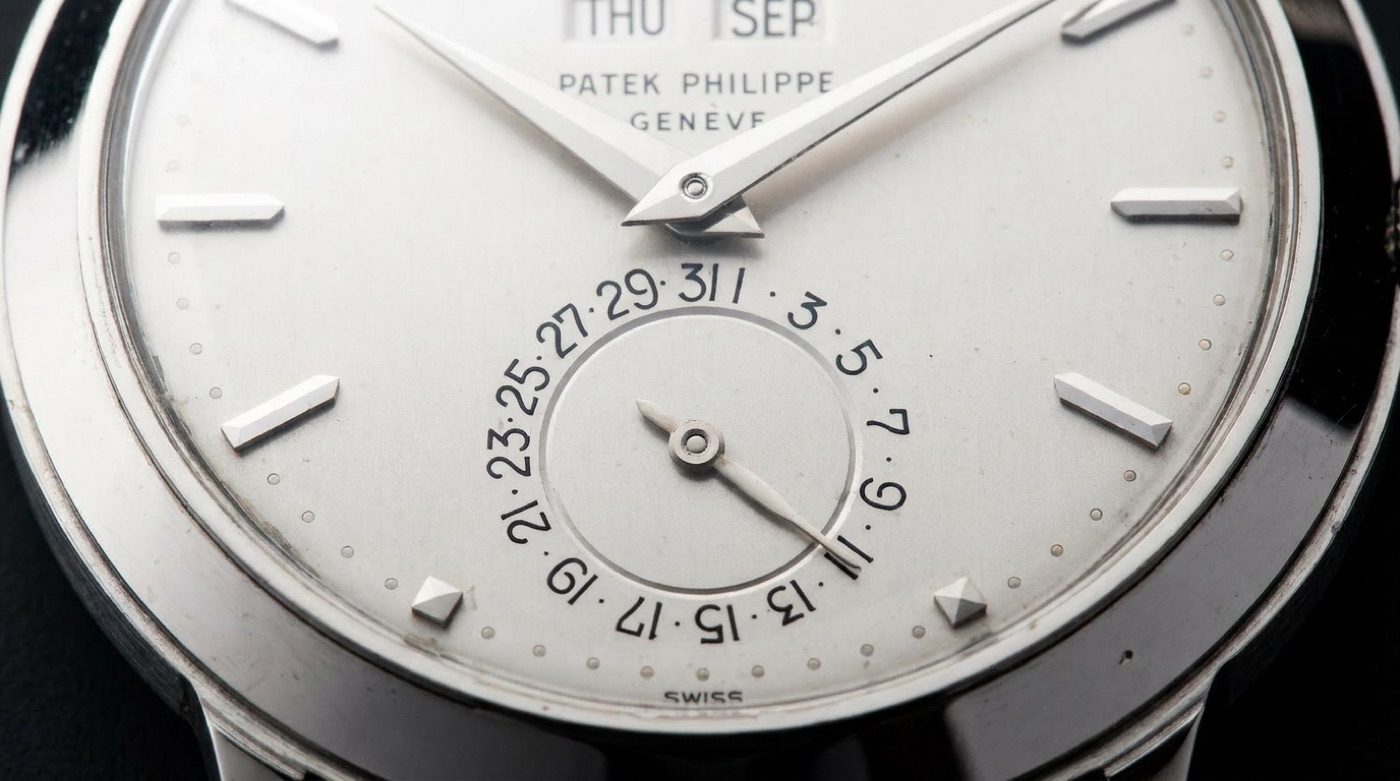
The Patek Philippe reference 3448 “Senza Luna”, a perpetual calendar missing its moonphase complication, illustrates how production anomalies can generate significant premiums. To an untrained buyer, the missing feature might appear as a defect or incompleteness. To the knowledgeable collector, it represents a rare factory variation from a specific production period. This esoteric detail requires deep familiarity with Patek’s historical records and manufacturing practices to recognize and value. The result is a piece that trades at a substantial premium over standard references because its rarity is protected by the high threshold of specialized knowledge required to authenticate and appreciate it. A parallel modern example sits with Greubel Forsey: their Tourbillon Secret hides the tourbillon — typically the watch’s most visible boast — on the caseback rather than on the dial. The signal is for the owner alone, and for any peer educated enough to ask to see the back.
A related steel-and-gold paradox is worth recording in this section. The Patek Philippe Nautilus in steel-and-gold (Ref 3700 vintage; Ref 5980 modern) trades for very large sums. The Rolex equivalent in steel-and-gold does not approach the values of the all-steel or all-gold Rolexes. The reason: Rolex remains an aspirational brand, and a mixed-metal Rolex reads as ‘you couldn’t afford the gold one’. At Patek, where simple ownership is itself a qualifier, the same combination signals deliberate restraint and so commands the premium.
The Tiffany-Signed Rolex Dial
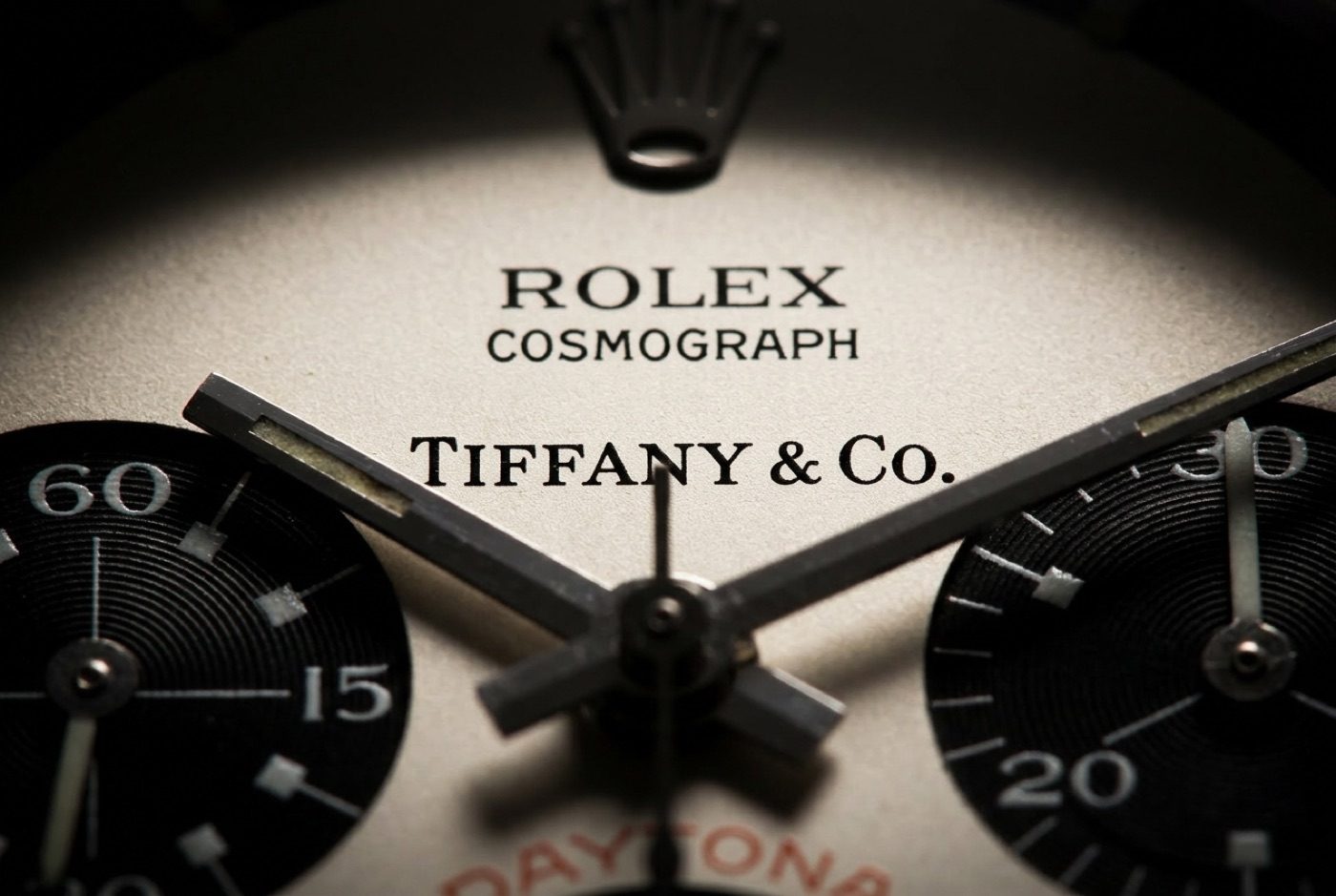
A Rolex dial bearing the Tiffany & Co. signature typically commands an uplift of 50 to 100% — not the several hundred percent sometimes cited. For modern-day Patek Philippe Tiffany pieces, that figure rises to approximately 150%. Curiously, the same uplift does not apply to vintage Patek examples — only the modern ones. This is a function of relatively prolific modern production and the consequent ‘drilling down’ onto the true rarities within it, a dynamic familiar to anyone who watched the late-80s/early-90s injection of premium into prolific references such as the Rolex Bubbleback and Prince (where unrestored examples briefly traded at double the price of restored ones). The celebrated $6.5 million sale of the Nautilus 5711 ‘Tiffany Blue’ in 2021 sits outside these multipliers entirely — a 170-piece commemorative edition sold at the peak of the market mania, not a guide to the premium a standard double-signed dial commands. To the general market, the additional stamping may seem like unnecessary clutter. To the collector, it is a verifiable link to a specific era of retail collaboration between two historic houses. This institutional provenance adds a layer of documented history that enhances liquidity and supports higher secondary-market pricing. The investor is acquiring not just a watch, but a tangible record of a commercial relationship that cannot be recreated.
The Tropical Dial
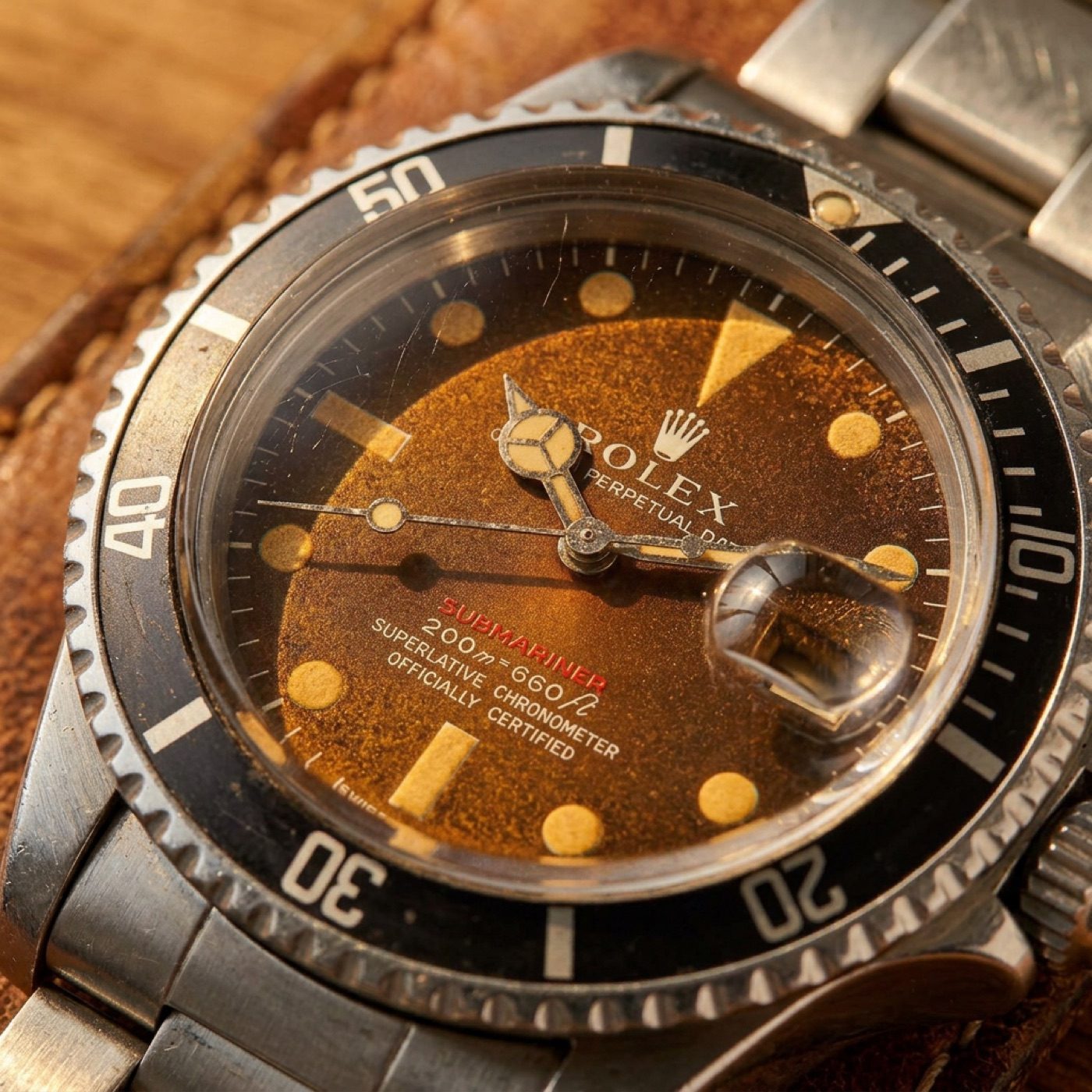
The market’s appreciation for “tropical” dials, vintage black dials that have aged to a warm chocolate brown through a combination of UV and/or moisture penetration, demonstrates how controlled decay can become a source of value. To the untrained eye, the color shift appears as damage or fading. To the experienced collector, it is proof of authentic age and survivorship. A machine can replicate a perfect black dial, but it cannot perfectly simulate decades of organic patina. This authenticity of age acts as a natural defense against counterfeits and supports a stable premium in the secondary market.
Key Takeaway for the Tier 1 Investor
Cultural alpha is achieved by identifying assets where value is rooted in specialized knowledge rather than broad visibility. By focusing on pieces protected by provenance, production anomalies, or irreplaceable human craftsmanship, the investor secures holdings that are insulated from mass-market volatility and counterfeit risk. In 2026, the most resilient returns come from understanding that the highest premiums are often paid for details that are not immediately apparent to the wider market. The mechanical watch on the wrist is no longer an accessory. It is a deliberate allocation that rewards those who can see the deeper mechanics of value.
The Information Barrier as a Practical Advantage
Specialized knowledge has become the decisive factor in horological investment. Unlike financial capital, which can be deployed immediately, this knowledge must be developed through sustained research into reference numbers, production histories, movement variations, and provenance records.
This barrier creates a selective normalization of prices. Assets that require significant expertise to evaluate and authenticate, such as specific production anomalies or rare historical variants, are naturally insulated from broad market volatility. When an asset’s value rests on details that are not immediately obvious, it becomes less susceptible to the rapid shifts that affect more visible pieces. The result is a more stable price floor supported by a smaller but more committed group of buyers who understand the underlying factors driving long-term appreciation.
Experienced collectors focus on verifiable discernment. They seek pieces where value is rooted in documented history, production details, or technical characteristics that require genuine research to appreciate. This approach prioritizes assets that maintain their worth through knowledge rather than widespread visibility. The distinction is not aesthetic preference; it is a practical investment strategy. Pieces protected by specialized knowledge tend to hold value more consistently because their appeal is based on factors that cannot be easily replicated or diluted by mass-market trends.
The Emulation Cycle: From Connoisseur to Broader Market
Status in the watch market flows in a predictable pattern. It begins with connoisseurs who identify value in obscure or under-appreciated pieces, often through deep knowledge of provenance, technical history, or limited production runs. As these early buyers establish the asset’s credentials, the signal spreads to a wider group of affluent collectors seeking to emulate that success. This emulation cycle drives demand and price escalation until the piece reaches broader visibility, at which point it risks losing its exclusivity.
The investor’s goal is to stay one step ahead of this cycle. By acquiring assets while they are still in the connoisseur phase, before they become widely recognized hype items, it is possible to capture significant appreciation as emulation broadens the buyer base. The 89% Rule illustrates the power of this dynamic: the market is now highly concentrated at the top, where scarcity and recognition create self-sustaining demand. The challenge is to identify pieces that offer genuine underlying value rather than temporary fashion. Neo-vintage watches from the 1990s, for example, often deliver superior craftsmanship and documented history at prices that have not yet been fully repriced by the broader market. A critical caveat for the contemporary collector: with newer, less historically anchored brands such as Richard Mille, the collectible neo-vintage value of an asset is permanently tethered to the current standing of the brand. Franck Muller is the textbook warning here. In the early 1990s, his watches commanded huge money and held strong residuals. Subsequent perceptions of cost-cutting and reduced product quality have meant that his vintage pieces — despite his real, formative impact on watchmaking — have struggled to reach the prices they should. When investing in a contemporary brand, the buyer is implicitly betting on the brand retaining its integrity for decades to come.
As automation and CNC techniques make industrial perfection more common, the market is shifting toward pieces that demonstrate irreplaceable human effort. The next frontier of status lies in the unscalable nature of true artisanal work, the kind found in independent makers whose output is limited by human time rather than machine capacity. By buying the signal before it becomes noise, investors can position themselves ahead of the emulation cycle and secure superior risk-adjusted returns.
The Veblen Inversion has turned the mechanical watch into one of the most efficient vehicles for portable high-density wealth. In a market where volume has collapsed but value has soared, the brands that master controlled scarcity and clear signaling have created assets that outperform many traditional classes. For the investor, understanding this economics of emulation is essential.
The Khanjar Case Study — Provenance as Currency

The Narrative: The Blood-Earned Commission
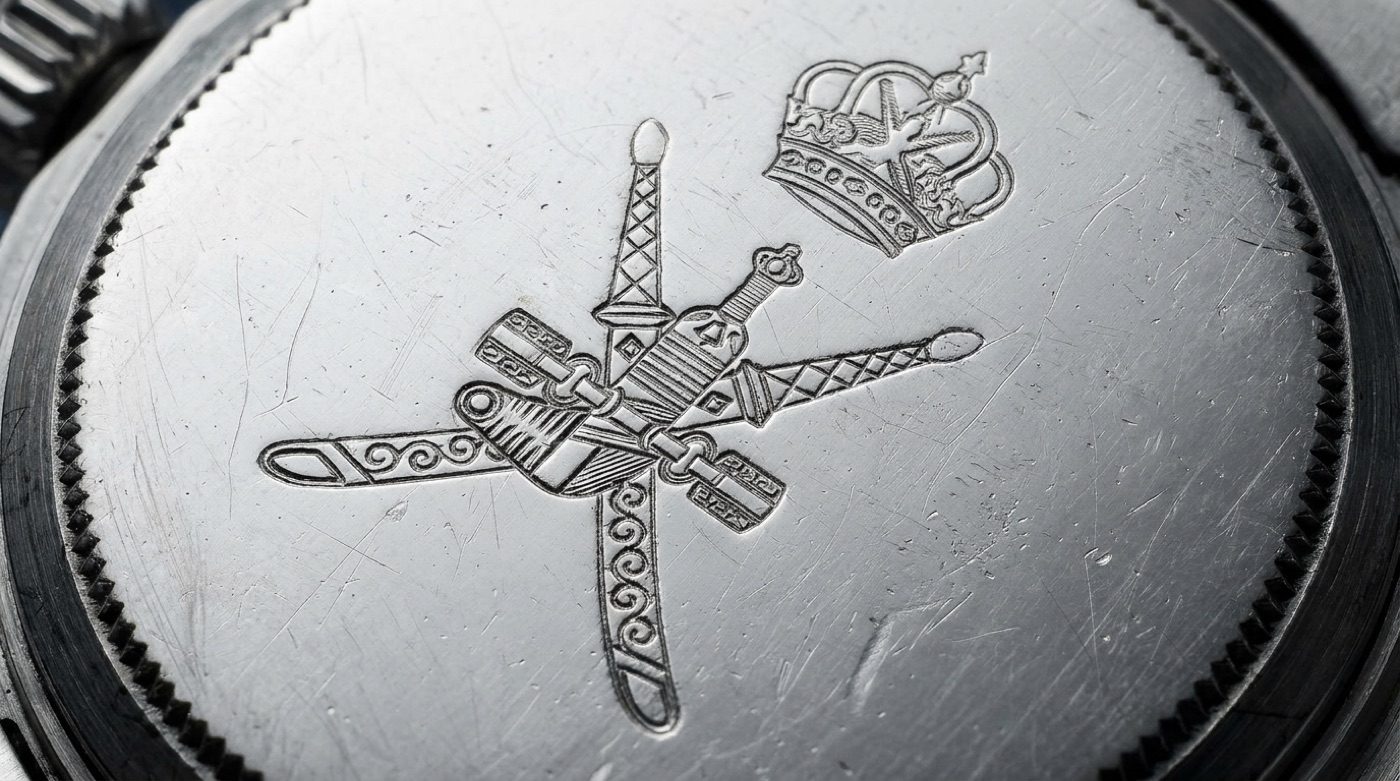
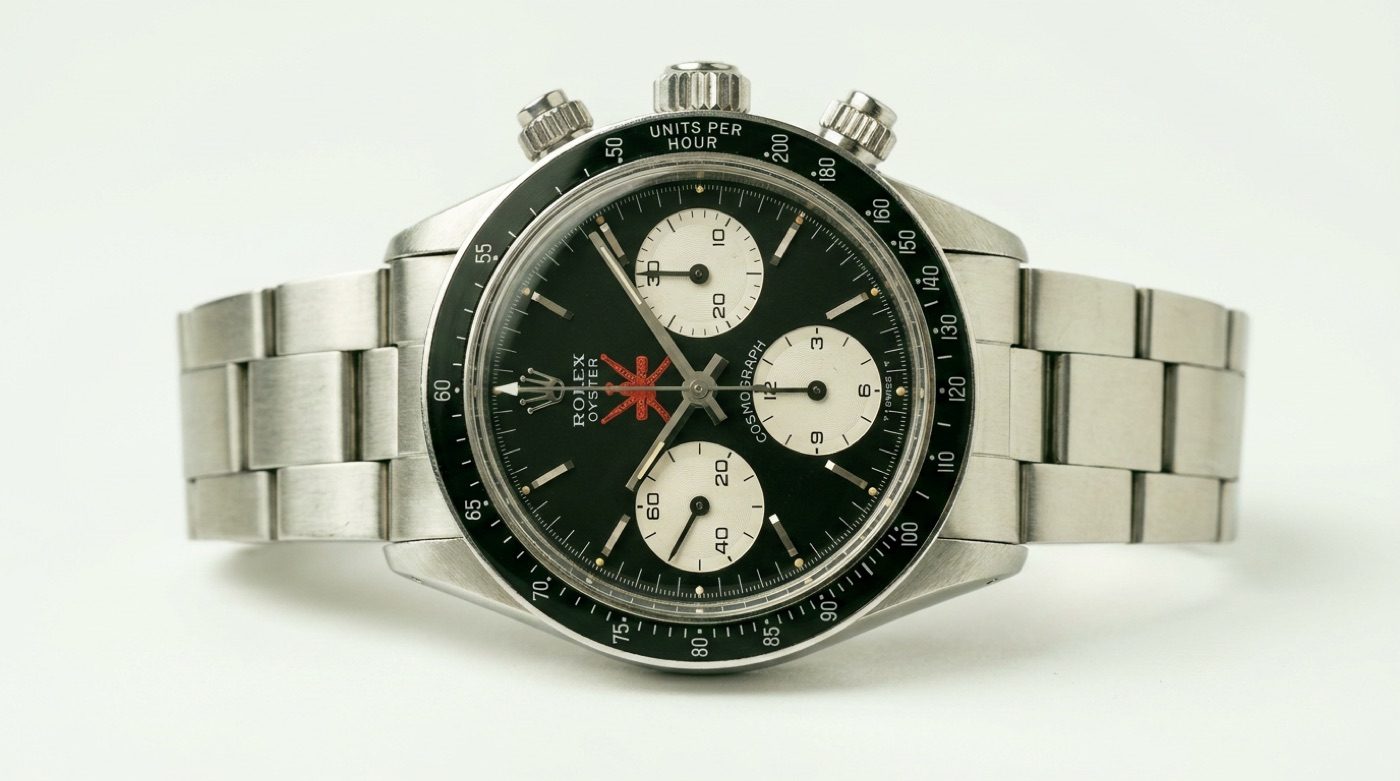
In the 1970s, Sultan Qaboos of Oman commissioned bespoke Rolex timepieces bearing the national "Khanjar" crest to reward British SAS operatives for their vital support during the Dhofar Rebellion. These were not ceremonial boardroom gifts; they were blood-earned honors. In engagements like the legendary Battle of Mirbat (1972), teams of fewer than ten SAS soldiers held off waves of hundreds of heavily armed insurgents in brutal, point-blank siege combat, ultimately preventing the collapse of the Sultanate.

The Pipeline: The Asprey Connection
Because these watches were never offered at retail, they bypassed the traditional consumer market entirely. Rolex had no official distribution presence in Oman at the time, so the Sultan routed these highly sensitive state commissions through Asprey of London, acting as the de facto Crown Jeweler. Asprey handled the specialized dial modifications—applying the Khanjar emblem—while preserving the factory movement and case.
The Accidental Scarcity: The Ritual of the Dial-Bin
In a striking example of market inefficiency, Western dealers in the 1980s and 1990s viewed these custom dials not as historical artifacts, but as aesthetic defacements or politically sensitive liabilities. As veteran dealer Tom Bolt has noted, many of these watches were subjected to the "ritual of the dial-bin"—the invaluable Khanjar dials were violently removed and replaced with standard Rolex service dials to make the watches more palatable to traditional buyers. This historically ignorant destruction, combined with natural attrition from military use, inadvertently engineered the extreme structural scarcity that exists today.
The Financialization: The Provenance Multiplier
By 2026, the global market has fully inverted its assessment. The same pieces that were once discarded now command astronomical premiums because apex collectors recognize that provenance is a non-replicable form of scarcity. While industrial techniques can replicate a mechanical gear train, they cannot recreate a specific historical context or a documented chain of state ownership. Today, a standard steel Daytona 6263 trades in the £60,000 to £80,000 range. A verified Khanjar example trades in the £400,000 to £1.5 million range (or £400,000 to £1 million trade-to-trade), representing a multiplier broadly between 7× and 20× depending on condition and configuration. This dramatic revaluation proves a core principle of the modern market: when utility is no longer the primary driver, narrative depth and verifiable history become the dominant sources of capital appreciation.
Lesson 1: The Sovereign Token
This represents the ultimate proof of Scarcity and Provenance. The Khanjar crest is not a decorative logo; it is a "Physical Ledger" of a specific, non-replicable geopolitical moment. By tying the asset to a state alliance and military history, it elevates the watch from a luxury consumer good to a "Sovereign Token." This specialized knowledge barrier naturally insulates the asset from mass-market volatility, allowing it to dramatically outperform almost every traditional stock over a 50-year horizon.
Lesson 2: Narrative Capital and the Valour Proxy
Beyond structural scarcity, the Khanjar executes the ultimate transmutation of emotion into equity. By purchasing this specific asset, the collector is acquiring an emotional proxy to the elite martial valour of the SAS. In the highly sterile, risk-managed environment of modern wealth, the visceral narrative of the Battle of Mirbat—blood, absolute survival, and lethal competence—becomes a highly liquid form of "Narrative Capital." The investor is quite literally paying a million-pound premium to wear a distilled, physical fragment of heroic history.
The Intellectual Framework as a Pricing Model
For the Tier 1 investor, sociological frameworks like those of Pierre Bourdieu and René Girard are not abstract philosophy; they are predictive economic models. They explain precisely why a few millimeters of ink on a Khanjar Rolex dial reliably generates up to a 20x price multiple, and how investors can use these dynamics to forecast future asset appreciation.
1. Objectified History as a Price Multiplier (Bourdieu)
In a market where mechanical perfection can now be achieved by automated CNC machines, technical specifications no longer guarantee a premium. Bourdieu’s concept of "objectified cultural capital" predicts that the market will reallocate its capital toward Narrative Scarcity. The Khanjar Rolex carries a documented link to Sultan Qaboos, the British SAS, and a precise geopolitical moment in state-building.
The Pricing Rule: Assets that possess a non-replicable, verifiable historical narrative will consistently command exponential multiples over their standard-production counterparts, because history is the only feature a brand cannot manufacture more of.
2. The Knowledge Barrier as a Volatility Shield (Bourdieu)
Bourdieu’s "embodied" capital explains the high threshold of knowledge required to authenticate and value a Khanjar dial. This is not a bug; it is a financial feature. Because it requires significant research to understand the difference between a genuine Asprey-modified Khanjar and a forgery, the asset is naturally insulated from casual speculators.
The Pricing Rule: The steeper the "knowledge curve" required to understand an asset, the harder its price floor. These assets are held by highly educated capital that does not panic-sell during macroeconomic downturns, creating a highly resilient investment.
3. Historical Rejection as an Emulation Catalyst (Girard)
René Girard’s theory of "mimetic desire" (the human drive to want what apex models want) predicts the velocity of price breakouts. In the 1990s, Khanjar dials were systematically thrown in the bin to make the watches more "commercial." This historical rejection inadvertently created extreme structural scarcity. Today, when apex collectors fiercely compete for the few untouched survivors, it triggers a mimetic contagion across the broader market.
The Pricing Rule: Assets that were historically misunderstood, rejected, or altered (creating a supply shock) are prime candidates for explosive price appreciation once the elite collector market re-evaluates them.
4. Survivorship Rarity
Ultimately, the Khanjar case study provides the modern investor with a fundamental formula for forecasting value. In an era of industrialized precision, the narrative attached to a watch predicts its financial ceiling far better than the movement inside it. A watch is just a tool; a surviving Khanjar is a physical ledger of a sovereign alliance. The market will always pay a premium for a ledger that cannot be rewritten.